
Regional impact of Ferris’ outreach and service learning projects
By Anne Hogenson
Director of Marketing


In his autobiography, Woodbridge N. Ferris described how his father, John Ferris Jr., and his father’s brothers and sisters were denied education and put to work in manual labor as children. Ferris states that his father was unable to read or write and “toiled incessantly” from age 13 until his death. Nevertheless, John Ferris Jr. sent his own children to school and managed to purchase land to start a farm, but the property was densely wooded and needed to be cleared—an effort that would have been impossible without the help of neighbors.
“On a given day his neighbors with their teams came to his assistance. This form of co-operation was called a ‘Logging Bee,’” Woodbridge Ferris wrote in 1923. “In this century we frequently hear lectures on the importance of community work. Little is heard, however, about its origin. ‘Bees’ were a necessity in the days of pioneering.”
As a United States senator, he would go on to envision large-scale systems for public good, even anticipating in 1928 the need for a U.S. department of education more than a half century before one was formally established. However, in 1884, he brought to his newly-founded school a lasting vision driven by his sincerity and sense of urgency, and informed more directly by the lessons of his childhood. Education and service were high-minded, transcendent virtues even as they were enacted on a small and local scale.
In that era, Big Rapids, Michigan was a bustling “boom town” of the lumber industry. To its North and East were vast logging claims, and the river and rail yards for transport. In the center of the city were businesses that thrived in a lumber-driven economy. Surrounding them to the West and South were the stately homes of their owners and proprietors. Many of these affluent residents questioned Ferris’ plans for a new school when their own schools already served their children well.
However, Ferris wasn’t planning a school for their children. His school would be for the boys and girls working in the region’s factories and fields—young people like his father, aunts and uncles. Education was service for Woodbridge Ferris, and if he later developed a reputation for being hard-nosed in his expectation that his students would pursue both virtues, it was down to that pioneer’s sense of cooperation, the sense that mutual service builds a community on the foundation of its members’ values.
Today, nearly every edition of Ferris Magazine includes a story of community outreach or service by Ferris State University staff or students. Individually, those stories not only communicate points of pride for the university but also make for compelling human-interest features because they focus on the impact of a specific Ferris initiative on a worthy cause.
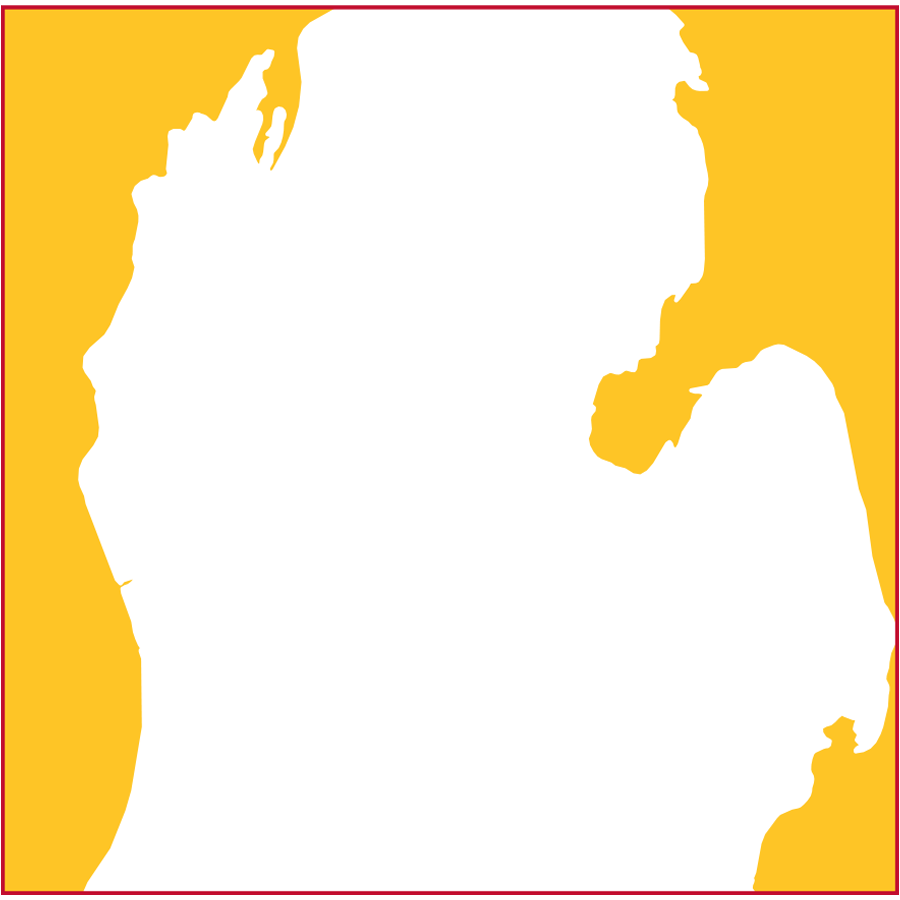
However, such in-depth looks at single initiatives don’t address how the combined efforts of our campus community members fulfill Woodbridge Ferris’ larger vision of a better democracy through individual acts of service. So, with this edition, we mark the beginning of Ferris State’s 135th year with something that we seldom pause to do: Rather than highlight one endeavor, we will step back to consider the number and variety of Ferris’ recent outreach and service efforts throughout Michigan communities.
Of the 37 initiatives described here, 24 relate to education or training, 21 help people facing economic or social disadvantage, 19 assist children, 14 provide access to health care and nine promote community enrichment through the arts, beautification or conservation. Each of these efforts represents a cause that is meaningful to the members of the Ferris community working toward it.
Even after 135 years, the people of Ferris State University remain committed to Woodbridge Ferris’ vision of democracy born of service to one’s community. They continue “to make the world better” as he would have envisioned it at the time. His sense of purpose ultimately became an inherent quality—maybe the best quality—of our campus culture.
“Let us, in whatever way we are best qualified, serve our
own community and thus fulfill the highest democracy.”
—Woodbridge N. Ferris, 1920
Baldwin
Michigan College of Optometry faculty and students provide low-cost examinations and eyewear through the University Eye Center at Baldwin Family Health Care for patients on BFHC’s sliding payment scale, which is determined by income and family size.
Baldwin
Ferris Nursing and Social Work students, in partnership with Spectrum Health Big Rapids and Reed City hospitals’ Outreach and Health Education departments, provided health and wellness screenings for patrons of the Bread of Life food pantry at St. Ann’s Catholic Church.
Bay City
College of Pharmacy students, led by Associate Professor Jill Coveyou, work with McLaren Health Care’s Helen M. Nickless Volunteer Clinic to provide free medical care to patients who have no medical insurance. Students volunteer in the clinic twice during their rotations and assist providers in developing effective low-cost treatment plans and counsel them on their medications.
Big Rapids
The Kappa Kappa Psi band fraternity at Ferris conducts free “Instrument Zoos” at local elementary schools, at Ferris’ Early Learning Center, and as part of the Festival of the Arts. The events allow children and adults to consider and try musical instruments.
Big Rapids
A Habitat for Humanity home is warm for the winter, thanks in part to HVACR program faculty and students. College of Engineering Technology associate professors Joe Compton and Brian Holton worked with a student team to install a boiler unit and water heater, lay radiant heat and gas piping, and develop and install an energy recovery unit which allows the home to meet Energy Star specifications.
Big Rapids
Ferris Television and Digital Media Production students enrolled in TDMP 466—Instructional Design under the direction of College of Education and Human Services Professor Connie Morcom completed a project to help raise funds to extend the Roben-Hood Airport runway.
Big Rapids
For more than a decade, Ferris Dining Services has hosted a free luncheon for clients and employees of Hope Network, an advocacy service for adults with limited capacity to live independently. Volunteers from Ferris’ bands and orchestra play holiday music at the luncheon.
Big Rapids
For 11 years, Ferris’ bands and orchestra have performed the Symphonic Santa Sunday Family Holiday Concert for students and the community. In lieu of an admission cost, the bands and orchestra accept donations to local charities such as the Salvation Army and Project Starburst Food Pantry.
Big Rapids
The FIRST Robotics Registered Student Organization at Ferris mentors and supports students of Big Rapids Public Schools, Crossroads Charter Academy and St. Mary Catholic School who are preparing to compete in the international FIRST Robotics competition, which allows middle and high school students to compete against other teams in floor games using robots that they have designed and built. The competition is widely renowned for its success in engaging students in STEM learning.
Big Rapids
Members of Kappa Delta Pi and Association of Future Educators RSOs, students in the College of Education and Human Services’ School of Education, participate in the COATS for KIDS drive, which collects gently-used coats for children in need.
Big Rapids
Ferris Dental Hygiene students, led by College of Health Professions Associate Professor Kathleen Harlan, provided a day of free preventative and therapeutic dental care for uninsured and under-insured children.
Big Rapids
Students and faculty of Ferris’ Nursing, Optometry and Pharmacy programs participate in a half-day per week interprofessional clinic at the University Eye Center, providing patients with disease-specific eye exams and one-on-one disease and medication education, as well as testing for diabetes, blood pressure and cholesterol. Studies show that the more comprehensive interprofessional care model may be more beneficial and cost-effective for rural patients than single-discipline treatments.
Big Rapids
The FIRST Robotics, Surveying and Women in Technology RSOs at Ferris assist elementary school students participating in the Riverview Elementary School science fair.
Big Rapids
Students in the Elementary Education and Early Childhood Development programs in Ferris’ College of Education and Human Services provide reading and writing support at Riverview Elementary School for kindergarten, first grade and fourth grade students. Students in the Social Work program also participate in a “Lunch Buddy” program which pairs them with a Riverview student for an hour per week.
Big Rapids
Students of Ferris’ Michigan College of Optometry, led by Professor Sarah Hinkley, provided free comprehensive vision rehabilitation examinations to 12 uninsured or under-insured patients with visual impairments.
Big Rapids
Ferris’ Card Wildlife Education Center provides a traveling presentation for Big Rapids elementary and middle schools on their math and science nights, as well as activities for home school science and Scout badges at the center. CWEC also provides funding for regional school and Hope Network field trips to the center.
Big Rapids
Students from all programs at Ferris participate in The BIG Event each April in Big Rapids. The national program engages college student volunteers in a day of service for local residents, typically consisting of yard work and basic maintenance. The event provides services for more than 200 local residences annually.
Big Rapids
Female students in College of Engineering Technology programs conduct “A Taste of Engineering” mini-sessions to give elementary students hands-on learning experiences in engineering technology and provide young girls with role models in the engineering and STEM fields.
Big Rapids
The Card Wildlife Education Center partnered with national conservation organizations to promote awareness of pollinator decline, engaging regional elementary and middle school students and the City of Big Rapids to plant more than 2,000 pollinator plants, dispense thousands of milkweed seeds and protect monarchs in the chrysalis stage. Coordinator Carrie Weis, director of the center and of Ferris’ Fine Art Gallery, was recognized as Big Rapids’ 2017 Citizen of the Year for her efforts.
Big Rapids
Students in College of Arts and Sciences Assistant Professor Luis Rivera’s Chemistry 451 class partnered with St. Mary Catholic School to provide chemistry instruction, designing and performing demonstrations with household chemicals to explain basic chemical and physical principles.
Big Rapids, Bitely, Boyne Falls, Cadillac, Cedar Springs, Central Lake, Comstock Park, Coopersville, Custer, East Jordan, Elmira, Gagetown, Grand Rapids, Harbor Beach, Hersey, Holland, Howard City, Lakeview, Leslie, Ludington, Macomb, Mason, Mesick, Millington, Morley, Muskegon, Newaygo, Okemos, Paris, Pentwater, Reed City, Remus, Rockford, Sand Lake, South Boardman, St. Johns, St. Louis, Stanwood, Tustin, Weidman, West Branch, White Cloud and Whitehall
Students and staff of the College of Engineering Technology, in partnership with the Office of the Provost and Vice President for Academic Affairs, the Engineering Education Service Center and regional K-12 partners have provided Technology Engineering Aptitude workshops to help prepare educators and parents from each of these cities to encourage their K-12 students to explore careers in the STEM fields. EESC has named Ferris its national center for coordination and expansion of the TEA program.
Big Rapids and Canadian Lakes
Students and staff of Ferris’ Architectural Technology and Welding programs, led by Welding Engineering Technology Associate Professor David Murray, have helped construct and install sculptures at locations including City Hall, Mitchell Creek Park and Pocket Park in Big Rapids, and Reuther Pavilion in Canadian Lakes.
Big Rapids, Charlotte, Cedar Springs, Detroit, Eaton Rapids, Grand Rapids, Harbor Beach, Hart, Holland, Jackson, Lansing, Marlette, Mason, Muskegon, Rockford, Shelby, Sparta, Traverse City and Warren
Ferris partners with a school in each of these communities to provide college readiness courses that improve students’ skills for college success. Covering career and education planning, college writing, study skills, and time management, the classes are taught on campus or in students’ home high schools by Ferris faculty or approved high school staff. Students earn college credits for their work, partner schools cover some of all of tuition, which Ferris provides at a discounted rate.
Big Rapids, Evart, Morley Stanwood and Reed City
Students of Ferris’ Nursing program engage in pediatric rotations at public schools in these districts in partnership with Spectrum Health and districts’ school nurses. The College of Health Professions students engage in project-based interventions that support the health of schoolchildren, including allergy, hygiene and HIV education; CPR and emergency response training; organization of a sick room; and creation of portable first aid kits.
Big Rapids, Fremont, Hesperia, Mesick and Paris
Students in these community school districts benefited from the Michigan College of Optometry’s Students in Need of Eyecare program. Led by Dr. Sarah Hinkley, a professor in the Optometry program, MCO students and staff provide comprehensive exams and eyewear for district students identified by school staff as lacking access to eye care.
Cedar Springs, Grand Rapids, Grandville, Ionia, Kalamazoo, Kentwood, Wayland and Wyoming
The Latino Entrepreneurship Initiative, provided by Ferris’ Latino Business and Economic Development Center, has served more than 30 people across these locations. The LEI serves Latino entrepreneurs, offering instruction and support to help them grow their businesses.
Grand Rapids
Staff of Ferris’ Latino Business and Economic Development Center equip young Latino professionals with resources to become leaders at work and in their communities through the Latino Talent Initiative. The eight-day program provides participants professional development and leadership training to help them bridge cultural gaps and maximize their effectiveness as West Michigan business and civic leaders.
Grand Rapids
A collaboration between Ferris’ Michigan College of Optometry and Cherry Street Health Services provides comprehensive adult and pediatric vision services for uninsured patients through the Grand Rapids Lions Club Vision Clinic at the Heart of the City Health Center. MCO doctoral students provide services under supervision of clinic optometrists who are MCO adjunct faculty.
Grand Rapids
College of Pharmacy Assistant Professor Lindsey Westerhof and Pharmacy students in their fourth year of clinical rotations are engaged in a research project in collaboration with staff of Mercy Health Physician Partners Wege Family Medicine Residency Center, Kent County Health Department and Bethany Christian Services, and with support from the American College of Clinical Pharmacy. The project studies cultural perceptions about illness and medication among refugees resettled in the region, with the long-term goal of helping patients better understand their medications and navigate the U.S. health care system.
Grand Rapids
Ferris’ CARE 2Gen project, led by Digital Media Software Engineering instructor Mohamed Abusharkh, offers four one-credit college courses at no cost to parents and guardians of Grand Rapids Public School students. The courses are held in GRPS facilities and help parents support their children in career planning and readiness.
Grand Rapids
Students in the Digital Animation and Game Design program in Ferris’ College of Education and Human Services, in partnership with the Grand Rapids Public Museum, are engaged in a service learning project to create a virtual reality experience that allows viewers to explore the streets of 1930s Grand Rapids.
Grand Rapids
Under the direction of Dawn Fox, associate professor of Social Work in the College of Arts and Sciences, students served three dinners and conducted a personal hygiene drive for Dégagé Ministries in Grand Rapids’ Heartside neighborhood, to help meet the needs of those struggling with homelessness. Students also participated in a housing simulation and engaged with Dégagé clients to better understand the challenges they face.
Grand Rapids
Students in Ferris’ Dental Hygiene program, with support from College of Health Professions Professor Kimberly Beistle and Assistant Professor Catherine Archer, provide free education and preventative care to clients of the Mel Trotter Ministries and Exalta Health programs.
Grand Rapids
Students and faculty of Ferris’ College of Pharmacy, under direction by Assistant Professor Susan DeVuyst-Miller and in partnership with West Michigan’s Coordinated Health Impact Alliance, to serve residents of Grand Rapids’ Hope Zones—underserved, at-risk neighborhoods. The Ferris team provided free education and screenings including blood pressure and blood glucose to residents of the Hope Zones, where chronic illnesses such as heart disease, stroke, diabetes and kidney disease are top causes of death.
Mecosta
Associate Professor in the College of Engineering Technology Paul Long and Architecture program students worked with Revitalize Mecosta and the Mecosta County Youth and Family Center to design and build mini-libraries for the village of Mecosta. The student team worked with local 5th, 6th and 7th graders to develop designs, and then joined community members to construct and install the mini-libraries.
Mecosta County
Laura Forbes, lab technician for the Biology department of Ferris’ College of Arts and Sciences, coordinates STEM Super Saturday activities for middle schoolers in the Mecosta County Intermediate School District. Taught by faculty from the Math, Physical Science and Biology departments as well as the College of Engineering Technology, the six-week Saturday morning series engages students in STEM learning activities.
Mecosta County
Fourteen students of the Music and Entertainment Business program in Ferris’ College of Business assisted with event production, sound production, stage management and other logistics for the “Light Up the Night” event, sponsored by Century 21 White House Realty. The event benefited Mecosta County nonprofit Angels of Action, which provides weekend meals to school children enrolled in the Federal Free and Reduced Price School Meal program. The event raised more than $35,000 for the cause.
Mecosta and Osceola counties
With support from College of Arts and Sciences Professor Sandra Alspach, students in Ferris’ Sports Communication classes, Athletics programs and in the Sports Careers RSO at Ferris helped conduct two fundraising campaigns for Area 5 (Mecosta and Osceola counties) Special Olympics. The students coordinated exhibition games of poly hockey and basketball between Ferris Athletics teams and Area 5 Special Olympics athletes.
Mecosta and Osceola counties
With support from Rhonda Bishop, associate professor and coordinator of the Bachelor of Science in Nursing program, students of Ferris’ College of Health Professions partner with the Northeastern Michigan Community Service Agency to provide lead screening for children in head start. With support from and Academic Service Learning grant, Nursing and Clinical Laboratory Science students test children’s blood samples free of charge and provide lead education materials at school sites, decreasing barriers for low-income families.
Morley and Stanwood
Twenty members of Kappa Delta Pi and Association of Future Educators RSOs, students in the College of Education and Human Services’ School of Education, helped run Morley Stanwood Family Nights in Fall 2018. The program works with children and community members to engage them in learning activities.
Mount Pleasant
Students and faculty of Ferris’ Dental Hygiene program engage in outreach efforts at the Special Olympics Michigan State Summer Games. College of Health Professions Associate Professor Kathleen Harlan and Clinical Dental Hygienist Denise Byrnes support a group of program students in providing dental education programming for participants. The outreach program has continued for more than 10 years.